
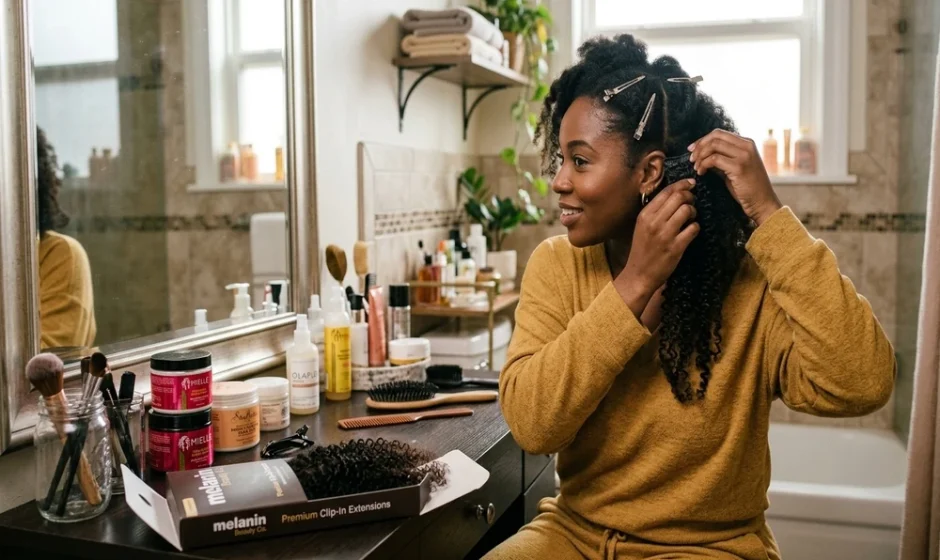

At-home beauty has moved beyond a temporary response to salon closures. It has become a lasting consumer habit shaped by convenience, digital education, changing budgets, and the desire for greater control over personal routines. For Black women, hair styling is both practical and expressive, so products that support quick changes without a permanent commitment are especially relevant. Clip-ins fit naturally into this shift because they allow customers to add volume, length, or texture on their own schedule. They also connect with the rise of tutorials, social media inspiration, and flexible beauty spending, making them an important category for brands that understand textured hair needs.
Consumers Want More Control Over Their Styling Routines
For customers with textured and natural hair, convenience is most valuable when it does not require compromising how the finished style blends. The increasing visibility ofClip In Hair Extensions For Black Women aligns with a larger consumer interest in products that can be applied, styled, and removed at home. The category gives customers more control over timing, salon expenses, and how frequently they change their appearance.
That control matters because beauty routines are becoming less rigid. A customer may want fuller hair for a weekend event, added length for content creation, or a protective styling option during a busy week. Instead of committing to a long installation, she can choose when to wear the extensions and when to give her hair a break.
Consumers are also evaluating extensions by how easily they fit into work schedules, travel, fitness routines, and last-minute plans. Brands that explain these everyday uses can make the category feel more accessible to first-time buyers.
Social Content Makes At-Home Styling Easier to Learn
Short-form videos, tutorials, before-and-after posts, and creator demonstrations have made beauty education widely available. Customers can watch how to section their hair, position clips, blend textures, and create different finishes before purchasing. This reduces some of the uncertainty that once surrounded self-installation.
For textured and natural hair consumers, product specificity makes those demonstrations more useful. Someone searching for theBest Kinky Straight Hair Clip Ins is often looking for more than added length. She may want a blowout-inspired texture that works with stretched natural hair, supports a fuller look, and can be installed without relying on a salon appointment.
Brands can strengthen this connection by creating educational content around realistic styling situations, such as:
- Blending clip-ins with leave-out
- Creating volume without excessive heat
- Choosing the right number of pieces
- Refreshing the hair between wears
- Storing the extensions properly
The strongest content does not simply display a finished style. It shows the process, answers common concerns, and helps the customer imagine achieving a similar result at home. That combination of inspiration and instruction can build confidence while reducing the fear of choosing the wrong texture.
Flexible Spending Supports Reusable Beauty Products
Consumers are becoming more selective about beauty spending. Salon services remain valuable, but many customers now balance professional appointments with at-home maintenance. A reusable extension product supports that balance because it may be worn multiple times, restyled for different occasions, and removed without booking another service.
This does not mean customers are simply searching for the lowest price. Many compare the total value of the purchase, including hair quality, blending, heat-styling options, reusability, and how much professional styling it could replace. Clear product descriptions and care guidance help shoppers understand that value before checkout.
For businesses, this creates an opportunity to merchandise clip-ins around use cases rather than price alone. A product page can explain whether a set is best for fullness, length, partial placement, or a complete transformation. Showing several looks created with the same set can make the purchase feel like a flexible addition to a beauty routine rather than a single-event expense.
Texture-Focused Products Can Build Stronger Customer Trust
The growth of at-home styling does not remove the need for expertise. It increases the importance of accurate texture guidance. Black women may wear their natural hair coily, stretched, silk pressed, lightly relaxed, or somewhere between those finishes. A broad label such as “natural texture” may not provide enough information to choose confidently.
Brands can respond with clear photos, close-up videos, density details, length guidance, and blending recommendations. Showing the product in different lighting and on more than one model can help shoppers evaluate the texture more realistically. Customer support should also be prepared to discuss the condition in which the wearer plans to blend her own hair.
Detailed merchandising supports trust because it respects the complexity of textured hair. It can also reduce avoidable returns and disappointment. When customers understand what a product is designed to do, they are more likely to choose correctly, care for it properly, and return to the brand.
Smart Style Takeaways
Clip-ins fit the growth of at-home beauty because they support independence without removing the option of professional styling. Customers can use them between salon visits, for special occasions, while experimenting with a new look, or whenever they want a temporary change. Their appeal comes from control, convenience, reusability, and creative freedom.
For beauty businesses, the opportunity is larger than selling an easy-to-install product. Success depends on helping shoppers choose the right texture, understand the application process, and see how the extensions fit into everyday life. Brands that combine strong products with useful education and realistic visual content can become trusted partners in the customer’s at-home styling routine.