
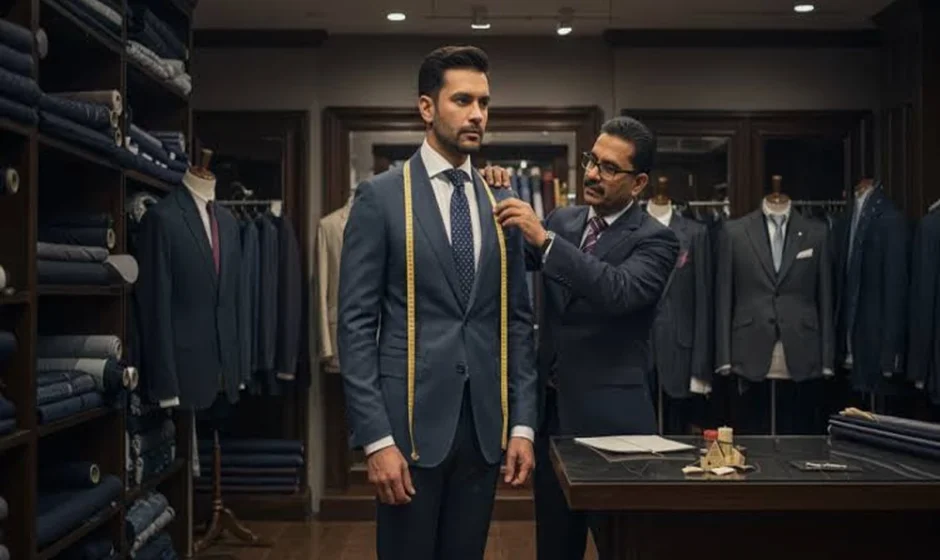

Benjamin had one day. A wedding in Phuket, a flight already booked, and no suit. He wasn’t looking for the best tailoring experience of his life. He was looking for something that would actually be ready in time and still look right in photos six weeks later.
Victor wasn’t in a hurry at all. He came in expecting the price to be more than he could justify, ordered a blue suit and a few shirts almost as a test, and came back a second time once he saw how the first order held up.
Neither of them set out to find a bangkok best tailor. They found themselves in one, for very different reasons.
What a Rushed Order Actually Tests
A same-day order doesn’t leave much room for anything to go wrong twice. Fabric gets picked once, fitted once, corrected once if needed, and then it’s finished. There’s no second sitting to catch what the first one missed.
That’s a real test of whether a shop can actually do what it claims, not just when there’s time to get it right, but when there isn’t.
Benjamin’s suit came together in under 24 hours. Reasonable price, plenty of fabric to choose from. He wasn’t comparing it against other Bangkok tailors at that point. He was just hoping it would fit.
What a Return Visit Actually Tests
A repeat order is a different kind of proof. Nobody comes back to a tailor they were only mildly satisfied with, not when there are hundreds of other options in the same city. Victor’s second order wasn’t really about needing more shirts. It was a vote of confidence, made with actual money, after the first suit had already been worn and tested against daily life.
Polanen tested it a different way entirely. She’d only bought shirts on her first visit to Bangkok. When she came back over a year later, they were still holding their shape.
That’s the version of quality that doesn’t show up in a fitting room. It shows up eighteen months later, in a closet, still fitting the way it did on day one.
Two Tests, One Answer
A rushed order under real pressure and a slow, considered second visit measure completely different things. One tests whether a shop performs under a deadline it didn’t choose. The other tests whether the work still holds up long after the transaction’s forgotten.
Most tailors can manage one of those well. Fewer manage both.
What Benjamin and Victor actually found, without either of them setting out to compare notes, was the same shop passing two very different tests. A bangkok best tailor isn’t proven by one good suit. It’s proven by holding up whether the client is in a panic or in no rush at all.
That’s a harder thing to fake than a five-star average.